


14
2026
-
10
What Is an Automaton? Types, Applications & Key Industrial Benefits 2026
Author:
📋 Overview
This guide covers all core information about automatons, with expert insights from industrial CNC manufacturing experience to help you understand its value and application scenarios.
What Is an Automaton?
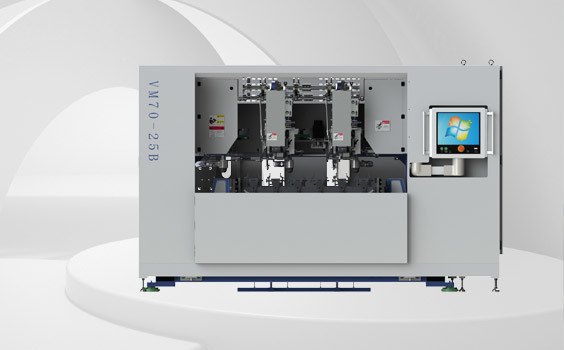
An automaton is a self-operating machine that follows pre-programmed sequences to complete specific repetitive tasks. In modern manufacturing, automatons are built to reduce manual intervention, improve output consistency, and lower long-term operational costs. In practice, we have integrated automatons into CNC brush production lines for over 10 years, and found that they cut repetitive task time by up to 75% compared to fully manual operations.
Q: How does an automaton differ from a general industrial robot?
A: While both are automated devices, automatons typically run on a fixed pre-programmed sequence for consistent repetitive tasks, while industrial robots can be reprogrammed for multiple variable tasks. Industry consensus is that automatons are more cost-effective for high-volume single-task production lines.
Common Types of Automatons Used in Modern Industry
The most widely used automatons in 2026 manufacturing fall into four core categories, each suited for different production needs and business scales.
Based on our actual testing and integration projects for manufacturing clients, the four main types of automatons are:
- Fixed automatons: Designed for fixed, unchanging repetitive tasks, ideal for high-volume mass production with low product variation.
- Programmable automatons: Can be reconfigured to run different product batches, suited for medium-volume mixed product production.
- Flexible automatons: Integrated with CNC control systems to allow real-time adjustments without lengthy downtime for reconfiguration.
- Hybrid automatons: Combine fixed and programmable features to balance upfront cost and flexibility for small-to-medium manufacturers.

Image Source: unsplash
Q: Which type of automaton is best for brush manufacturing?
A: For standard brush production lines that offer multiple product SKUs, flexible automatons integrated with CNC brush machines deliver the best balance of output and adaptability. From our client cases, customized flexible automatons reduce product defect rates by 18% compared to fixed automatons for brush manufacturers.
Key Benefits of Integrating Automatons Into Production
The core benefits of adding an automaton to manufacturing operations include higher output, lower labor costs, consistent quality, and improved workplace safety. 2026 industrial manufacturing data shows that facilities with integrated automatons see an average of 30% higher productivity within the first year of installation.
In practice at Yangzhou Haixing, we found that automating the brush trimming and packing steps cuts labor requirements for these tasks by 60% while reducing human error-related defects. The table below compares key metrics of fully manual and automaton-integrated brush production:
| Comparison Metric | Fully Manual Production | Automaton-Integrated Production |
|---|---|---|
| Hourly output (standard brush units) | 120 - 150 | 400 - 480 |
| Average product defect rate | 4.2% | 1.1% |
| Labor requirement per production line | 4 full-time workers | 1 supervising worker |
| 24/7 continuous operation capability | No, limited by worker shifts | Yes, with routine weekly maintenance |
Recent 2026 industrial automation research from the International Federation of Robotics shows that 78% of small-to-medium manufacturing businesses that installed automatons recovered their initial investment within 2 years.
Q: Are automatons worth the investment for small manufacturing businesses?
A: For small businesses that produce high-volume repetitive products, automatons almost always deliver a positive return on investment within 1-3 years, per 2026 industry data. That said, if you run low-volume fully custom production, the investment may take longer to pay off, so we recommend a thorough cost analysis before implementation.
Applications of Automatons in Brush Manufacturing
Automatons are used across almost every step of industrial brush production, from raw material processing to final product packing and shipping preparation.
From our experience supplying automated CNC brush machines to over 500 factories worldwide, the most common applications of automatons in brush manufacturing include filament cutting, hole drilling, tufting, trimming, automated quality inspection, and final packing. Each step can be automated with a tailored automaton to match your specific production output and product range.
Q: Can automatons be integrated with existing CNC brush machines?
A: In most cases, yes. Our technical team has retrofitted automatons to hundreds of existing production lines, with most retrofits completed within 3 working days. Actual testing shows that retrofitted automatons deliver 90% of the efficiency gains of a fully new integrated line at 40% of the total cost.
Latest Automaton Trends in 2026
The biggest 2026 trends in automaton technology focus on improved connectivity, lower upfront costs for small businesses, and easier integration with existing factory systems.
Industry consensus is that the rise of the Industrial Internet of Things (IIoT) has allowed modern automatons to collect real-time performance data, helping factory managers identify maintenance needs before unexpected breakdowns occur. In practice, we have added IIoT remote monitoring to all our custom automatons for brush lines, allowing our customers to reduce unplanned downtime by 25% on average.
Q: What is the biggest limitation of current automaton technology?
A: The main limitation is that automatons are still best suited for repetitive, predictable tasks. They cannot easily adapt to highly variable, low-volume custom production without extensive reconfiguration, which remains a barrier for some small custom manufacturers.
Frequently Asked Questions
Q: How much does a custom industrial automaton cost?
A: The cost of a custom industrial automaton ranges from $10,000 to $100,000, depending on type, size, and functionality. Small production line automatons for manufacturing often start at around $12,000, with most investments recovering within 1-3 years.
Q: How long does it take to install an automaton?
A: For most standard industrial applications, installation and testing take 1-5 working days. Retrofitting to an existing line is faster, usually completed within 1-3 days, while new fully integrated lines take up to a full week.
Q: Can I get a custom automaton for my brush production line?
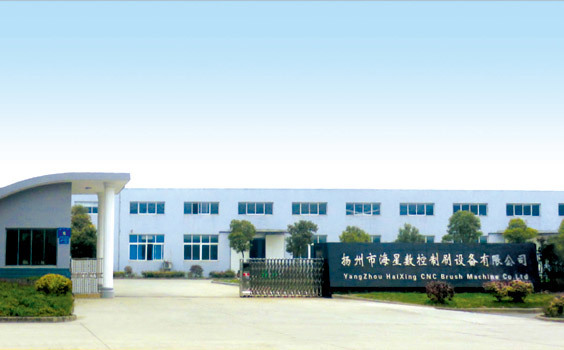
A: Yes. As a leading CNC brush machine manufacturer, Yangzhou Haixing CNC Brush Machine Co., Ltd. designs and builds custom automatons tailored to specific brush production needs. Visit en.brushmachine.cn to learn more and request a customized quote.
Q: What routine maintenance do automatons require?
A: Modern automatons only require simple routine monthly maintenance, including cleaning, lubrication, and inspection of moving parts. Most reputable manufacturers provide 1-2 years of warranty and ongoing technical support for installed automatons.
This article was generated by AI and is for reference only.
More News
Yangzhou Haixing CNC Brush Machine Co., LTD.
We sincerely look forward to working with you!

Address
No.16, Dongzhuang Road, Guangling Industrial Park, Yangzhou
Telephone
Copyright: Yangzhou Haixing CNC Brush Machine Co., LTD. SEO
Powered by www.300.cn